Home comfort · Textile care
A Field Guide to Knit Throws: Texture, Warmth, and Care
A knit throw can change the temperature of a room without changing the thermostat. Draped over a chair, folded at the foot of a bed, or spread beside a quiet practice space, it offers an easy layer of comfort. The details matter: fiber determines much of a throw’s character, stitch shapes its surface and drape, and care habits help it keep both.
Published October 24, 2026
There is a particular usefulness to a blanket that does not need a special occasion. A knit throw is neither quite bedding nor quite clothing. It is a flexible layer, ready for a cool morning, a reading hour, a short meditation, or the first chill of evening. Its appeal rests partly in that adaptability—and partly in the small sensory details that turn an ordinary textile into a source of everyday ease.
To choose one well, look beyond color and softness at first touch. Consider the fiber, the weight, the stitch pattern, the way the fabric hangs, and the care it asks of you. These qualities work together. A breathable cotton knit may suit a room that changes temperature through the day; an alpaca blend may offer more insulating warmth with a soft, fuzzy surface. A stretchy stitch can provide a relaxed drape, but may also need careful handling to keep its shape.
This is a guide to reading those details. It is not a contest between natural fibers or a formula for finding one perfect throw. The better question is simpler: What kind of comfort do you need, and what kind of care are you willing to give it?
Start with the fiber
Fiber is the material story beneath the texture. It influences how a knit feels against the skin, how much warmth it offers, how it responds to washing, and how it behaves after repeated use. Labels are worth reading closely, especially when a throw combines two or more fibers. A blend can balance qualities, but it also means the care needs of the finished textile may differ from what you expect from either fiber alone.
Organic cotton: breathable, familiar, adaptable
Cotton is often a comfortable place to begin. Its hand can range from smooth and crisp to plush and textured, depending on the yarn and construction. In a knit throw, cotton can provide a breathable layer with a relatively relaxed feel. That makes it useful in homes where warmth is welcome but heavy insulation is not, or where the throw will move between a sofa, bedroom, and practice space.
Organic cotton describes how the cotton was grown under a defined certification standard; it does not, by itself, tell you how thick, soft, or warm a particular throw will feel. Those qualities depend on yarn, stitch, finishing, and weight. For example, a cotton chenille yarn can create a soft, plush surface, while a structured knit may feel lighter and more open. A throw’s construction matters as much as its fiber label.
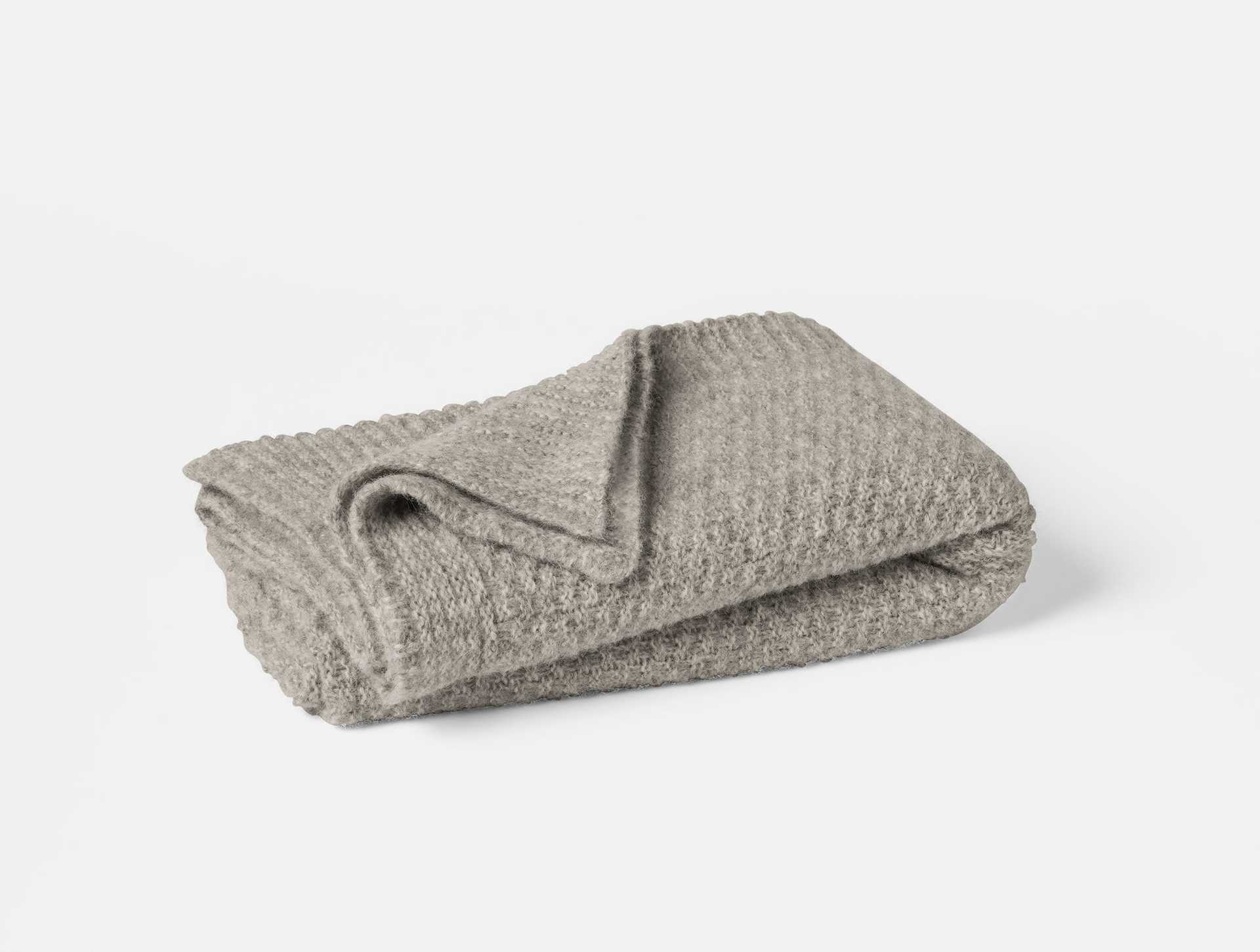
Some organic cotton knit throws are designed for straightforward home care. The Casa Loma Organic Knit Throw, for instance, is made from organic cotton in a breathable fishbone stitch, with a ribbed hem. Its listed care guidance calls for a cold, gentle machine wash and low tumble drying. Always follow the care instructions for the specific item rather than assuming every cotton knit can be washed the same way.
Alpaca and cotton: a balance of warmth and breathability
Alpaca has a naturally soft, insulating character, while cotton can contribute breathability and durability. In a blend, the two fibers offer a different balance from cotton alone: a warmer feel without necessarily creating a bulky layer. The precise result depends on the proportion of each fiber and the way the yarn is spun and knitted.
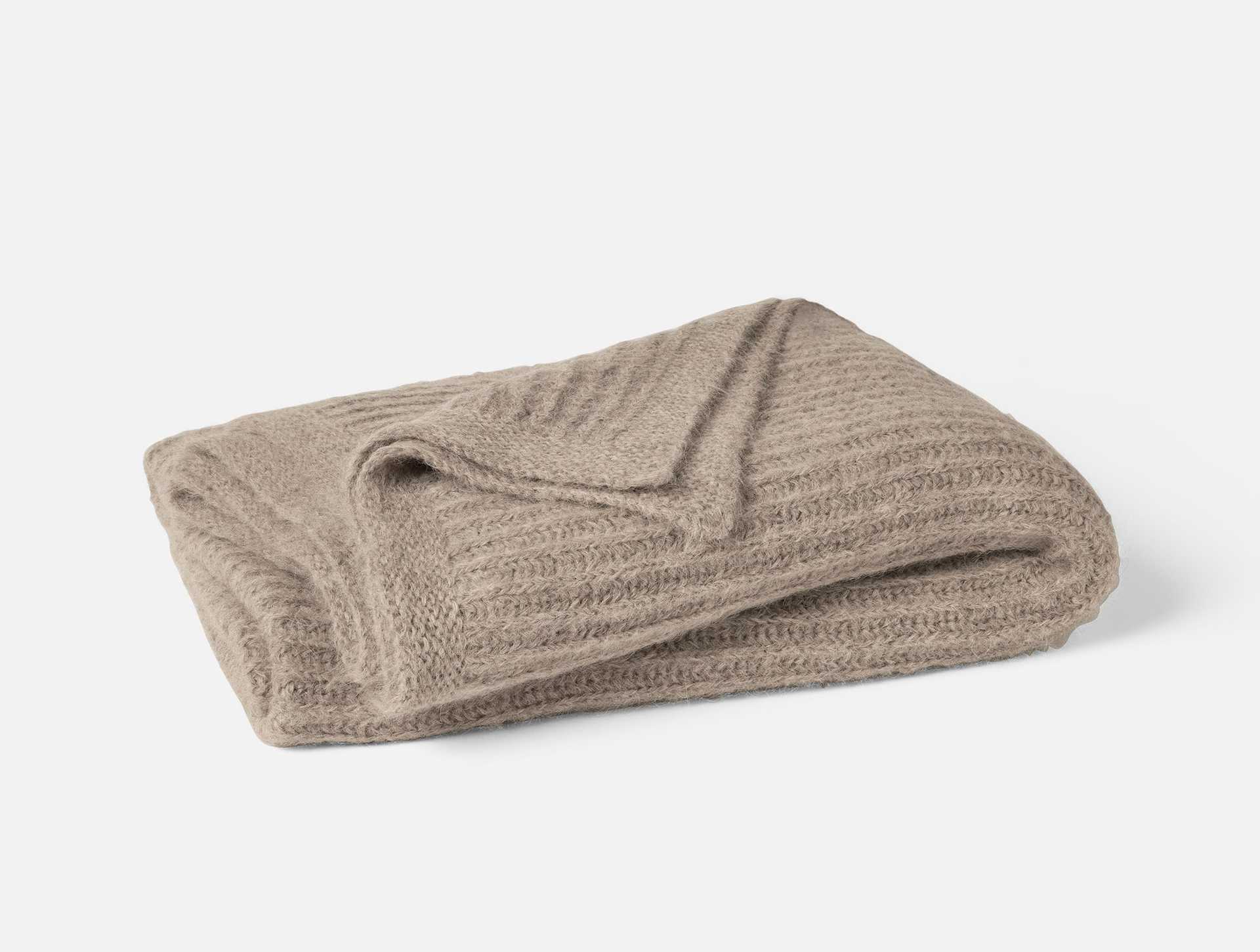
The Cordillera Alpaca Cotton Knit Throw combines 56% alpaca with 44% pima cotton. Its seed stitch gives the surface visible texture, and the fiber blend is described as soft and fuzzy. It is sourced and woven in Peru, and its care instructions specify dry cleaning. That last point is part of the material choice, not a footnote: a throw that feels easy to use may still need more considered cleaning than a machine-washable cotton layer.
Suri alpaca: warmth with a distinct surface
Suri alpaca fiber is known for its fine, lustrous appearance and smooth, silky feel. In a knit throw, it can provide a particularly soft surface and substantial warmth without the visual heaviness of a thick, dense blanket. Fiber claims and warmth comparisons can vary according to how they are measured, so the most practical approach is to assess the product’s actual composition, construction, and care instructions together.
The Andes Suri Alpaca Knit Throw is made from 100% Suri alpaca and uses a tuck stitch that adds texture. It is listed as a 50-by-70-inch throw, sourced and woven in Peru, with dry-clean-only care. Its fiber and construction make it a different proposition from a washable cotton layer: a choice for someone who values warmth and texture and is comfortable planning for specialist care.
Read the stitch, not just the label
Two throws made from the same fiber can feel surprisingly different. Stitch is one reason. It determines how loops connect, how much air the fabric holds, how the surface catches light, and how readily the textile stretches. The pattern may be subtle from across the room, but it becomes more apparent when the throw is folded over an arm or gathered around the shoulders.
A seed stitch, as used in the Cordillera alpaca-cotton throw, creates a small, pebbled texture. The surface has visual depth and a tactile quality that can make a layer feel more substantial without relying on a dense, heavy construction. A tuck stitch, found in the Suri alpaca example, produces a different relief and rhythm. Such names describe construction, not a guarantee of softness or warmth; the yarn and finishing remain part of the equation.
Ribbed knits often have pronounced flexibility. That stretch can help a throw settle easily over a chair or bed, but it can also make shape retention a consideration. More open or relaxed knits may drape fluidly, while tightly structured patterns can feel more stable. A smooth, uniform surface may suit a restrained interior; a pronounced stitch can become a quiet focal point even in a neutral color.
When shopping, ask how the fabric behaves when lifted. Does it fall in soft folds, or hold a more defined shape? Does it feel airy or compact? Is the surface fuzzy, smooth, nubby, or ribbed? These observations are more useful than relying on a broad phrase such as “cozy,” which can describe several different experiences.
Warmth is a combination, not a single number
Fiber affects warmth, but it is not the whole story. Yarn thickness, knit density, the size of the openings between stitches, and the throw’s overall dimensions all shape how it feels in use. A lighter throw may be right for a warm room or a short period of rest. A more insulating layer may be welcome in a drafty reading nook or during a slower evening practice.
Personal comfort matters, too. Some people prefer a breathable layer they can fold or remove quickly. Others like the contained feeling of a heavier textile. Neither preference is a measure of how a throw ought to be used. A throw can be a practical temperature layer, a soft surface for lounging, or simply a familiar texture that makes a room feel more settled.
For a bedroom, consider whether the throw is intended to cover the feet, lie across the bed, or provide warmth while sitting up. In a reading corner, a smaller or lighter layer may be easier to keep within reach. In a quiet home practice space, choose something that will not slide or bunch uncomfortably if it is used over the legs during breathing or relaxation. A textile designed for lounging is not a substitute for a yoga prop or support cushion, but it can make a pause feel more comfortable.
Drape, size, and the places a throw lives
Drape is the way a textile falls over a surface or around the body. A soft, fluid knit can create loose folds and adapt easily to different furniture. A more structured throw may look orderly when folded and hold its edges in place. Neither is inherently better; the right choice depends on whether you want a layer that looks composed or one that is easy to rearrange.
Size changes the experience. A throw measuring 50 by 70 inches, such as the Andes Suri Alpaca Knit Throw, offers useful coverage for many seated and lounging situations, though the fit will naturally vary by person and furniture. Before choosing, think about the most common use: a lap layer, an extra bed covering, a chair accent, or a shared blanket. Dimensions that work neatly at the foot of a bed may feel different when wrapped around the shoulders.
Also consider where the textile will be stored when not in use. A substantial knit can be folded on an open shelf; a soft, flexible one may be more naturally draped over a chair. Regularly hanging a stretchy knit from a narrow point can put strain on its loops. Folding it broadly or supporting its weight across a wider surface can help reduce distortion.
Care: protect the shape as well as the softness
The care label is part of the product, not an afterthought. A throw’s fibers, yarns, stitch structure, dyes, and finishing all influence how it should be cleaned. A gentle approach can help preserve the fabric, but the correct method is the one specified for that particular textile.
- Check the label first. Confirm whether the throw is machine washable, hand washable, or dry-clean-only. Do not infer care instructions from fiber content alone.
- Use gentle handling where directed. Cold water and a delicate cycle are common instructions for some cotton knits. Use mild detergent and avoid overloading the machine so the textile has room to move.
- Support wet knits. Water can make a knit heavier and more vulnerable to stretching. Lift it carefully rather than pulling on one corner, and follow the label’s drying directions.
- Dry without unnecessary heat. If low tumble drying is permitted, remove the throw promptly. Air-drying flat may be appropriate for some items, but follow the maker’s instructions rather than applying one method to every knit.
- Keep dry-clean-only fibers out of the wash. Alpaca blends and Suri alpaca throws may have specialist care requirements. Forcing them into a home washing routine can affect their texture or shape.
- Store clean and dry. Fold the throw loosely and keep it away from damp conditions. Avoid compressing a delicate knit under heavy objects for long periods.
Stretch deserves particular attention. Knitted fabric is formed from interlocking loops, which give it flexibility but can also allow the shape to change under strain. Pulling at a snag, stretching the corners to make a bed, or hanging a wet throw by one edge can place uneven pressure on those loops. Handle the fabric gently and avoid tugging at loose yarns. If a thread catches, resist the impulse to cut it without understanding the construction; a tailor or textile-care professional may be able to advise on a safe repair.
A considered choice for a calmer home
Comfort is often built from ordinary decisions: the chair placed near a window, the light lowered at the end of the day, the layer kept close enough to reach without thinking. A knit throw belongs to that quiet architecture of home. It can mark a corner as a place to read, rest, or take a few unhurried breaths. Its usefulness does not depend on a particular ritual. It simply makes a small pocket of warmth available.
That usefulness also makes material choices worth considering. If easy laundering is central to your routine, look for a throw whose care instructions suit your household. If warmth and a distinctive fiber feel are priorities, a more delicate option may be worthwhile—provided its upkeep is realistic. If you want a versatile everyday layer, compare cotton knits by texture and weight rather than assuming that all organic cotton throws perform alike.
Responsible sourcing and certifications can add useful context, but they do not replace questions about durability, care, or fit. Read what a certification covers, then weigh it alongside the practical details. A well-chosen throw is one that serves the way you live, not merely the way it looks in a room.
A quick field checklist
Before bringing a knit throw home, use these questions to narrow the choice:
- Which fiber or blend matches the warmth and breathability you want?
- Does the surface feel smooth, plush, fuzzy, or textured enough for your intended use?
- Will the stitch drape the way you prefer, and are you comfortable with possible stretch?
- Are the dimensions right for a lap, bed, sofa, chair, or quiet practice space?
- Can you follow the listed washing and drying instructions over time?
- Will the throw be easy to store without hanging or compressing it in a way that could distort the knit?
The answers need not point to the most luxurious fiber or the most elaborate stitch. They should point to the layer you will actually reach for. A breathable cotton knit and a warm alpaca throw may both earn a place in a home, but they serve different needs and ask for different care. Understanding that difference is the beginning of choosing well.